

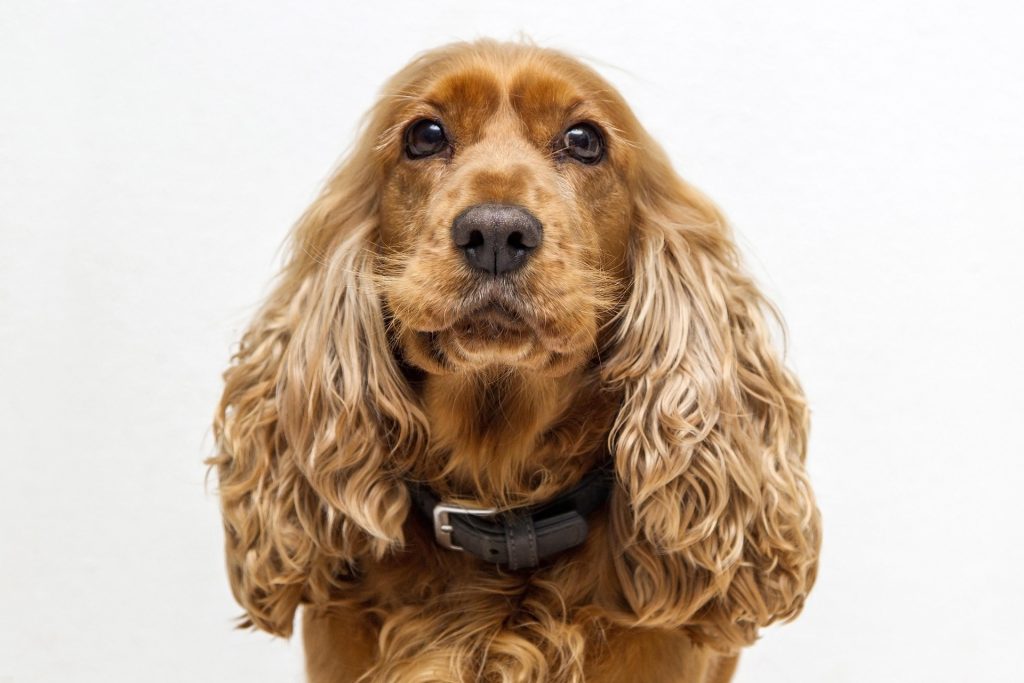
KCS is a eye disease in dogs which needs to be treated for life. With the right treatment, the vast majority of dogs with KCS do well.
Symptoms of KCS in dogs
In KCS, the tear glands do not function properly and tear production is too low. This leads to irritation of the cornea and mucous membrane of the eye. Common signs are:
- Red eyes
- Thick, slimy or purulent secretion that sticks to the surface of the eye, often as a lump in the corner of the eye
- The dog squinting or squinting
- A dull or lackluster cornea
The cornea can also become inflamed and this can occur. corneal ulcer. With prolonged disease, blood vessels and pigment can grow into the cornea, which should normally be completely clear. This can affect vision.
The symptoms are similar to a common eye inflammation in dogs, and recurrent eye inflammation may be a sign of KCS. KCS is not contagious, either between dogs or to humans.
Why does the dog get KCS?
There are several possible causes of KCS. The most common form is caused by the dog's own immune system attacking the tear glands. This is called an autoimmune disease.
KCS is seen more often in certain dog breeds, including cocker spaniels, pugs, cavalier king charles spaniels, west highland white terriers, shih tzus, lhasa apsos, and english bulldogs.
How is the diagnosis made? Schirmer's tear test
Diagnosis is made based on the dog's symptoms and by measuring how much tear fluid the eye produces. This is done with a so-called Schirmer's tear test (STT), where a small strip of paper is placed in the eye for one minute.
In KCS, tear production is usually clearly reduced. A value below 10 mm/min strongly suggests KCS, while values between 10 and 15 mm/min may be a gray area and need to be assessed together with other findings.
Treatment of KCS in dogs
KCS is a chronic disease that requires lifelong treatment. The goal of treatment is to stimulate the production of tears, replace the missing tears, and protect the surface of the eye. Treatment consists of three parts.
Cleaning with saline solution or eyewash
The eyes need to be kept clean. The eyes are rinsed with saline solution (NaCl) or eyewash for dogs every day, so that the secretion does not remain on the cornea.
Tear replacement eye drops
Tear replacement in the form of lubricating eye drops is used to keep the surface of the eye moist. How often the drops need to be given depends on how low the tear production is. Initially, this may be needed several times a day, often 3 to 6 times a day.
Tear-stimulating treatment with ciclosporin or tacrolimus
Tear-stimulating treatment is very important in the most common, immune-mediated form of KCS. Drugs containing cyclosporine (for example, the eye ointment Optimmune vet) or tacrolimus are used to affect the immune system in the tear glands and stimulate the remaining tear production. It may take several weeks for the treatment to have its full effect.
In some cases, KCS may be due to a disruption in the nerve supply to the lacrimal gland, known as neurogenic KCS. In such cases, treatment may need to be adapted to the underlying cause.
A lot of treatment at the beginning
It may feel like there is a lot of treatment at first, with both cleaning, tear replacement drops and tear-stimulating medication. As tear production begins to kick in, the need for rinsing and tear replacement drops can usually decrease.
However, it is important to never stop the tear-stimulating treatment on your own initiative, even if the eyes look good. KCS is a chronic disease and the tear-stimulating treatment usually needs to be given lifelong to keep tear production going.
Follow-up
It takes time for the tear-stimulating treatment to take effect. Therefore, a return visit is usually recommended after about 6 weeks, when tear production can be rechecked with the Schirmer tear test and the treatment adjusted if necessary.
If the dog has a corneal ulcer or other more pronounced changes, more frequent checks may be needed.
With the right treatment, the vast majority of dogs with KCS do well and can have a good quality of life. The most important thing is that the treatment is given regularly and that the eyes are checked when necessary.
Do you suspect dry eyes in your dog? We examine the dog's eyes at a home visit, in an environment where the dog is calm.
Frequently asked questions about KCS in dogs
Can dry eyes in dogs go away on their own?
No. The most common form of KCS is autoimmune and chronic. Without treatment, the cornea continues to be damaged, with the risk of corneal ulcers, pigmentation and reduced vision. However, with tear-stimulating treatment, the body's own tear production can be started again.
What eye drops should a dog with KCS have?
There are two different types. Tear replacement eye drops that lubricate and protect the eye, and a tear-stimulating medication with cyclosporine or tacrolimus that acts on the tear gland itself. Tear replacement is available over the counter, the tear-stimulating treatment is prescribed by a veterinarian.
Is KCS contagious?
No. KCS is usually caused by the dog's own immune system and is not contagious to other dogs or humans. This means that it can be confused with a contagious eye infection, as the symptoms look similar.
Can KCS cause corneal ulcers?
Yes. A dry cornea heals less quickly and is more susceptible to injury, and corneal ulcers occur as a complication of KCS. Squinting and squinting are signs of pain. If the dog has a corneal ulcer, more frequent checks are needed.
How long does the dog need to be treated?
Life out. Cleaning and tear replacement can often be tapered off once tear production has started, but tear-stimulating treatment should continue even when the eyes look healthy.
Text: Elin Reepalu
Licensed veterinarian
Level 1 specialist in dog & cat diseases.
Authorized optometrist.


