

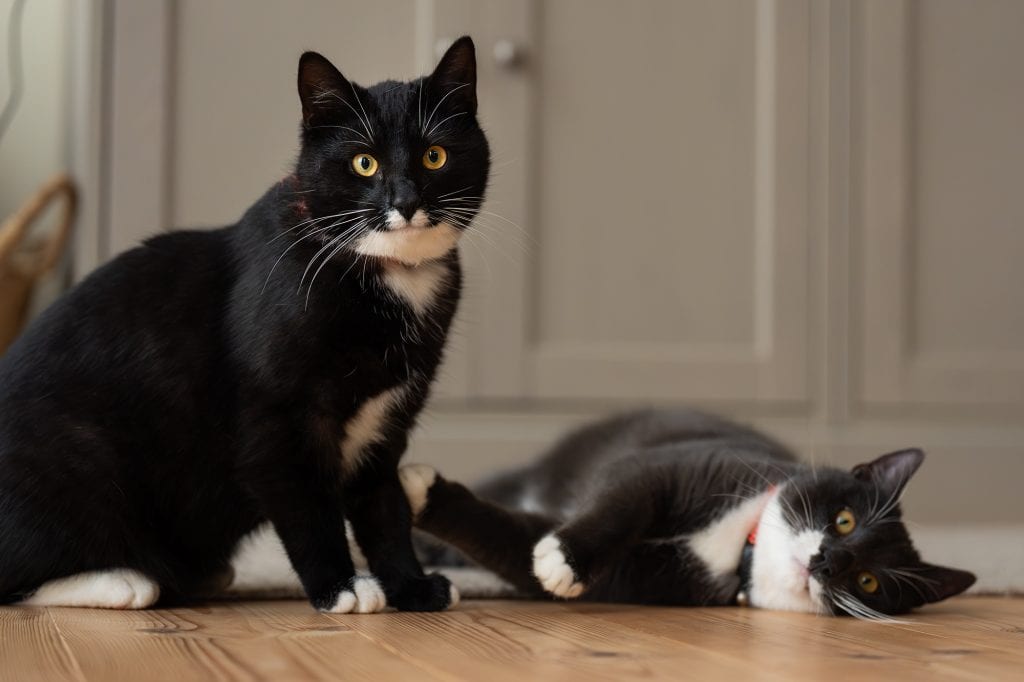
The cat pees inside or outside the box – the home environment can make a difference
When your cat suddenly starts running to the litter box repeatedly, straining to pee, or urinating in places other than the litter box, it's easy to get worried. Urinary tract problems are common in cats and can have a variety of causes. For example, your cat may be suffering from feline idiopathic cystitis (FIC), urinary stones, a urinary tract infection, or urinary retention. The symptoms can look very similar even though the causes are different.
In addition to the correct diagnosis and treatment, the cat's home environment can play an important role – especially in FIC. Small changes in everyday life can give the cat more security, choice and control.
Signs of urinary tract problems – the cat urinates frequently, little or blood
Common signs include frequent visits to the litter box, prolonged attempts to urinate, small amounts of urine, blood in the urine, meowing, or appearing to be in pain when urinating. Some cats lick their genitals a lot or start urinating outside the litter box.
Some cats also become more withdrawn, hide, eat less or seem tired. Since the same symptoms can be seen in several different diseases, it is important for a veterinarian to investigate the cause.
Feline idiopathic cystitis (FIC) – when the cat's entire system is affected
Feline idiopathic cystitis (FIC) means that the cat experiences symptoms from the lower urinary tract without another clear explanation being found, such as urinary stones or a urinary tract infection.
FIC is a complex condition where the interaction between the nervous system, the brain's stress responses, hormones, the bladder and the cat's environment may be important. The cat does not need to be overtly stressed for these processes to occur.
However, factors in the home environment can affect how the cat feels and how easily it can handle various stresses. Limited access to resources, conflicts between cats, changes in daily life, low activity or few opportunities to choose for itself can be significant.
That's why environmental improvement is an important part of treatment and prevention of new episodes.
Urinary stones in cats – when crystals or stones become a problem
Urinary stones can form in the urinary tract and irritate the bladder. The most common types in cats are struvite and calcium oxalate.
Stones can cause the same type of symptoms as FIC, but can also in some cases contribute to the blockage of the urethra. Investigation may therefore need to include, for example, urine tests and imaging diagnostics.
It is important for the cat to drink enough water, as a larger urine volume can help dilute the urine. For certain types of urinary stones, a special diet can also be an important part of treatment.
Urinary tract infection in cats – not the most common explanation
Urinary tract infection is not a common explanation for urinary tract symptoms in otherwise healthy cats. The risk increases with age and certain other diseases, among other things.
If an infection is suspected, urine culture may be important to confirm that bacteria are indeed present and to choose the right treatment. Read more about urinary tract infection, urinary stones and urinary retention in cats.
Urinary retention in cats – an emergency condition
If the cat repeatedly tries to urinate but no urine comes out, or only a few drops, you should seek veterinary attention immediately. The cat may also be anxious, in pain, meowing, hiding or licking around the genital opening.
If urinary retention continues for a long time, the cat may become very ill, vomit, become weak or collapse. Urinary retention is a life-threatening condition and requires emergency veterinary care.
Environmental improvement – more than just reducing stress
A good home environment gives the cat the opportunity to make choices and have control over its everyday life.
For example, it can be about being able to choose where it wants to rest, eat, drink, scratch and go to the toilet – and being able to avoid other cats or people when it wants to be left alone.
Even small changes can make a difference. The goal is to create an environment where the cat has access to its resources in a safe and predictable way.
The cat is peeing inside – what can you do at home?
Litter boxes and toilet environment
A practical rule of thumb is to have one litter box per cat plus an extra. The boxes should be placed in different, quiet and easily accessible places where the cat feels safe.
Many cats appreciate large boxes and soft, unscented litter. Some prefer open boxes.
Keep the boxes clean and remove urine and feces regularly with thorough cleaning occasionally.
If your cat urinates outside the litter box, it is not a sign of revenge, protest or disobedience. Punishment can instead increase insecurity and make the problem worse.
Food and water
In multi-cat homes, it is a good idea to spread out multiple food and water resources. This reduces the risk of competition and makes it easier for each cat to access their resources in peace and quiet.
Encourage the cat to drink
It is important that your cat gets enough fluids. Try multiple water stations, wide bowls or a water fountain if your cat likes it. Wet food can also help increase fluid intake.
Safe places
Cats need the opportunity to retreat and rest undisturbed. Boxes, hutches, hiding places and raised beds can give cats better control over their surroundings.
In homes with multiple cats, it is a good idea to offer several such places so that the cats do not have to compete for them.
Scratching, playing and movement
Give your cat the opportunity to scratch, play and move in ways that suit them. Scratching boards and scratching posts can be placed where the cat actually wants to use them.
Play and activity can also contribute to a more stimulating everyday life. For cats that have access to the outdoors, a safe outdoor environment or run can provide additional opportunities for activity and exploration.
Reduce conflicts between cats
If multiple cats live together, it is important that they do not have to compete for food, water, litter boxes, sleeping places or other important resources.
Spreading out resources can reduce conflict even if the cats don't fight openly. Conflict can sometimes be very subtle and can be noticed by a cat avoiding certain rooms, resources, or other cats.
Predictable everyday life
Try to create a daily routine with predictable routines. Major changes can be implemented gradually when possible.
Positive and calm contact with people can also contribute to a safer environment.
Environmental improvement is not just for cats with FIC
A more thoughtful home environment is good for all cats, but can be especially valuable for cats that have recurring problems with FIC.
The important thing is to look at the whole cat and its entire environment. In some situations, pheromones can also be a complement, but they should be seen as part of a broader environmental strategy rather than a stand-alone treatment.
Start with small changes – checklist for your cat’s home environment
It doesn't have to be complicated to start improving your cat's home environment. Consider:
- Does the cat have several quiet and easily accessible places for its toilet visits?
- Are there multiple places for food and water?
- Can the cat retreat and rest undisturbed?
- Are there high places and hiding places?
- Can the cat scratch, play and move in a way that suits it?
- Is there competition or conflict between cats in the home?
- Is everyday life relatively predictable?
Environmental improvement is not a substitute for veterinary examination or treatment when your cat has symptoms. However, by giving your cat better opportunities to feel safe, make choices and have control, you can create better conditions for well-being – and for some cats, even reduce the risk of recurring urinary tract problems.
It doesn't have to be a big change. To us, an extra water bowl, a quieter spot for the litter box, or a new hiding spot may seem like a small thing – but to the cat, it can make a big difference.
Text: Jonathan Hober
Licensed veterinarian


